
12 Mind-Blowing Secrets of Sagrada Família
By Los Patos Barcelona
You've seen the photos. You've scrolled past the spires a hundred times on Instagram. But if you think you know Sagrada Família, you're only seeing the surface.
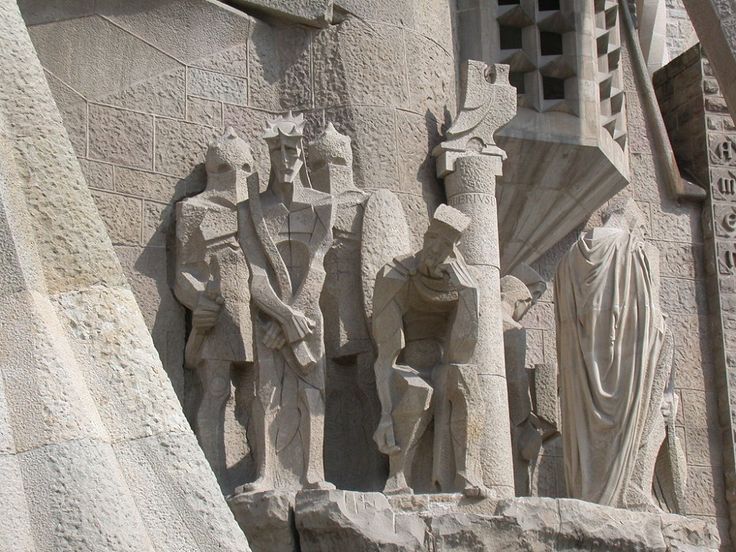
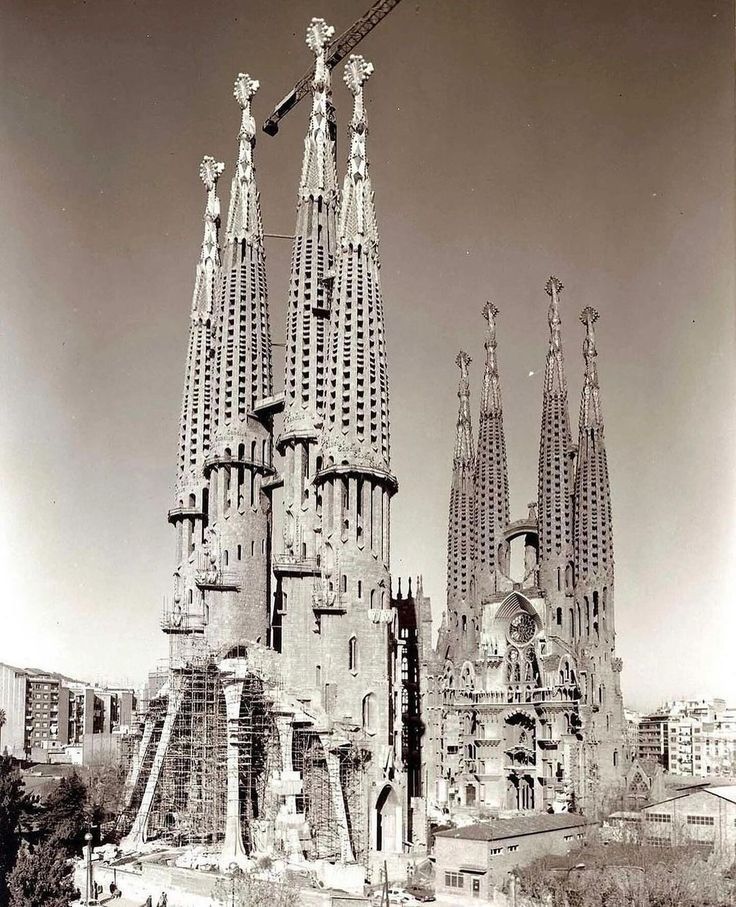
It's Been Under Construction Longer Than the Eiffel Tower Has Been Standing
Work on Sagrada Família began in March 1882, which means the project is well past the 140-year mark. To put that in perspective: the Eiffel Tower was built in just 26 months, and it is now younger than the site of Barcelona's most iconic building. The original architect, Francisco de Paula del Villar, resigned after barely a year. A young Antoni Gaudí took over in 1883 at age
31, and proceeded to reimagine everything from scratch. Completion is currently projected for the early 2030s — though anyone who has followed this project knows to stay flexible with those dates.
Gaudí Is Buried Inside — and You Can Visit His Tomb
In June 1926, Antoni Gaudí was struck by a tram on the Gran Via. He was initially mistaken for a beggar because of his worn clothes and wasn't recognized until hours later. He died three days later, aged 73. His body now rests in the crypt chapel beneath the basilica, dedicated to Our Lady of Mount Carmel. Visitors can look through a window into the tomb — a quiet, surprisingly moving moment amid the spectacle above. For all the grandeur Gaudí created, his resting place is remarkably modest.
Gaudí Never Drew a Blueprint in the Traditional Sense
Here's the engineering puzzle at the heart of Sagrada Família: Gaudí left no conventional architectural drawings for the entire structure. Instead, he worked obsessively with scale models, hanging chains and weighted threads upside down to calculate organic arches, then flipping the photographs to visualize the design right-side up. When his studio was ransacked and burned in 1936, many of these fragile plaster models were
destroyed. Modern architects and mathematicians spent decades piecing together fragments, using 3D scanning and computer modeling to interpret Gaudí's intent. Building his vision has been, in many ways, an archaeological reconstruction as much as a construction project.
It Will Be the Tallest Religious Building in Europe — Intentionally Second-Tallest Overall
When complete, the central tower of Jesus Christ will rise to 172.5 metres, surpassing Cologne Cathedral and every other religious structure on the continent. But Gaudí placed a deliberate limit on his ambition: the mountain of Montjuïc overlooking Barcelona stands at approximately 173 metres, and Gaudí refused to let any human creation outrank God's. So Sagrada Família will remain — by exactly half a metre — shorter than the hill it gazes toward. That restraint is itself an architectural statement, baked in stone.
UNESCO Recognized It While It Was Still Unfi nished
In 1984, UNESCO added the works of Antoni Gaudí to its list of World Heritage Sites — an extraordinary decision given that Sagrada Família was nowhere near complete. The designation covered multiple Gaudí works across Barcelona, including Casa Milà, Casa Batlló, and Park Güell. Even incomplete, the basilica represented such a singular achievement in architectural history that waiting for the last stone to be placed seemed unnecessary. It remains one of the few active UNESCO World Heritage Sites still under construction.
The Magic Squares That Hide in Plain Sight
On the Passion Façade — the stark, angular western face of the basilica — sculptor Josep Maria Subirachs embedded a 4×4 magic square in the stone. Every row, column, diagonal, and many subgroups of the square add up to 33: the age of Jesus Christ at his crucifixion. The square even repeats two numbers, giving it 310 possible combinations that all arrive at the same sum. It's one of several hidden mathematical codes scattered through the building, placed there not as puzzles, but as expressions of sacred geometry.
Visiting tip
Most tourists arrive at midday in the full heat. The real move is to visit at opening time (9 am) or in the late afternoon when the western light turns the stained glass on the Nativity Façade into something otherworldly. Book tickets directly on the official website well in advance — it sells out weeks in advance during peak season.
It Was Almost Destroyed — and the Plans Were Saved From Rubble
In July 1936, at the outbreak of the Spanish Civil War, anarchist militias attacked and burned Sagrada Família's crypt and workshop, destroying many of Gaudí's original scale models, drawings, and documents. Decades of irreplaceable design work turned to ash in a single night. What survived was painstakingly reassembled from fragments — thousands of plaster pieces catalogued and glued back together like a massive jigsaw puzzle, then analyzed using early computer technology in the 1980s. The fact that construction continued, and that the results are as faithful to Gaudí's vision
as they appear, is one of architectural history's great acts of obsessive dedication.
FAQs
Your questions answered
How long has Sagrada Família been under construction?
Construction began in March 1882 — well over 140 years ago. Completion is currently projected for the early 2030s.
Is Sagrada Família a cathedral or a basilica?
It is a minor basilica. Pope Benedict XVI consecrated and elevated it to basilica status in November 2010. Barcelona's actual cathedral is the Cathedral of the Holy Cross and Saint Eulalia in the Gothic Quarter.
Is it a UNESCO World Heritage Site?
Yes — and unusually, it received that recognition in 1984 while still under construction, as part of the broader recognition of Gaudí's works across Barcelona.
Do I need to book tickets in advance?
Absolutely, and well in advance. Sagrada Família receives over 4 million visitors per year and sells out weeks in advance during peak season. Book directly on the official website to avoid inflated reseller prices.