
The Barcelona Food Guide: What to Eat, Where to Eat It, and What to Avoid
By Los Patos Barcelona
From buttery croquetas to the freshest seafood paella in Barceloneta — your no-nonsense guide to eating like a local.
The must-eat dishes of Barcelona
Catalan cuisine is its own proud world — distinct from Spanish food in the same way that Catalan identity is distinct from the rest of Spain. Before you order a single thing, bookmark these dishes. These are the non-negotiables.
Menu
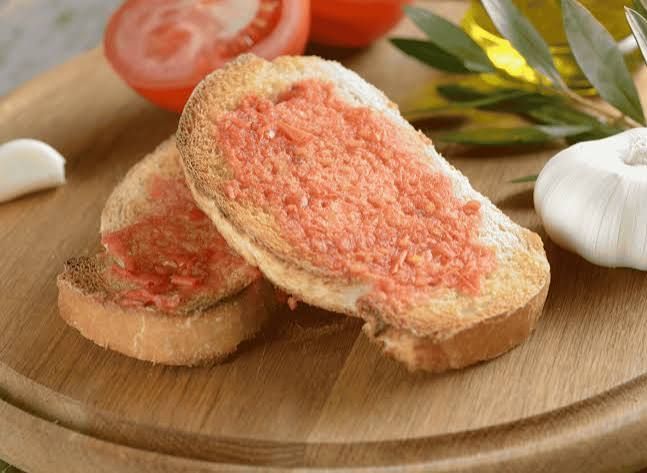
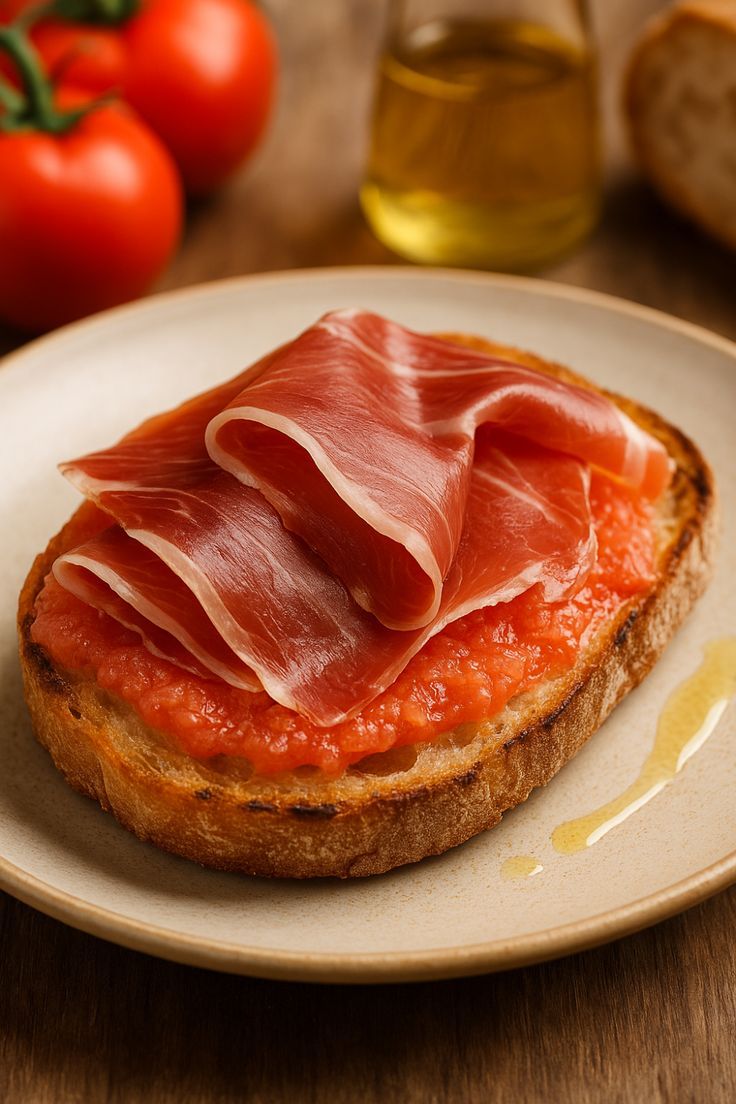
In Barcelona, pa amb tomàquet isn't a side dish — it's a philosophy. Ripe tomato, good oil, a little salt. The city has four ingredients.
The truth about paella in Barcelona
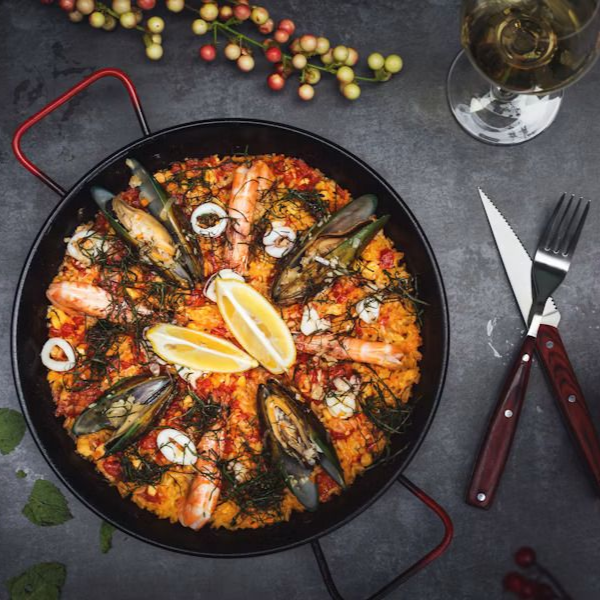
Everyone wants paella in Barcelona. That's completely understandable. Here's what you need to know before you order it. Paella is technically a Valencian dish — not Catalan — but Barcelona has developed its own magnificent rice culture. The best versions use short-grain bomba rice soaked in rich homemade seafood broth, cooked in wide shallow pans until a golden crust (the socarrat) forms at the bottom. That crust is the goal. That crust is everything.
Seafood paella done properly — bomba rice, fresh shellfish, and that all-important socarrat crust at the bottom.
Also worth knowing: Barcelona's version of fideuà — paella's lesser-known noodle cousin — is toasted pasta cooked in seafood stock until it tastes like the ocean itself. It's extraordinary. Order it at lunch, by the water, at Can Solé or La Mar Salada in Barceloneta.
🧠 Local rule: Never order paella in a place that has it sitting pre-made under a heat lamp. Real paella is cooked to order and takes 20–25 minutes. If it arrives in five minutes, run.
Where to actually eat paella
Head to the Barceloneta neighbourhood — the beach district where locals have been eating seafood for generations. Can Solé, La Mar Salada, and Can Majó are all reliable choices that have earned their reputations through quality rather than location.
La Boqueria & the Markets Worth Knowing
La Boqueria is Barcelona's most famous food market, with over 300 stalls selling fresh seafood, Iberian ham, and local Catalan specialties.
Visit before 10:00 AM for the best local experience and fewer crowds. Explore the back stalls for fresher produce, and skip the overpriced fruit smoothies at the entrance.
Try: Jamón Ibérico, fresh seafood, Catalan cheese, and a vermouth at Bar Pinotxo.
Beyond La Boqueria: Mercat de Santa Caterina
If you want to experience a market without the crowds, head to the Mercat de Santa Caterina in the El Born neighbourhood. Designed by Enric Miralles with a spectacular undulating mosaic roof, it's where local chefs actually shop. Quieter, more authentic, and just as beautiful. The neighbourhood around it — full of natural wine bars, artisan food shops, and independent restaurants — is one of the best eating areas in the city
Where locals actually eat — by neighbourhood
Barcelona's food scene is deeply neighbourhood-specific. Where you eat matters almost as much as what you eat. Here's your cheat sheet
01
Barceloneta
Seafood, paella, fideuà. Long lunches by the water that stretch into the afternoon. The place for rice dishes done properly.
02
El Born
Creative tapas bars, natural wine, Catalan bistros, and great pintxos. Barcelona's most culinarily interesting neighbourhood right now.
03
Gràcia
Neighbourhood restaurants, terrace dining, vermouth bars. Where locals eat on Sundays without pretension. Relaxed, affordable, excellent.
04
Poble Sec
Carrer de Blai — a street of pintxos bars — is one of the city's great casual eating experiences. Arrive hungry, leave very full.
05
Sant Antoni
The city's trendiest food neighbourhood. The renovated Sant Antoni market is surrounded by excellent bars and brunch spots.
06
Sarrià
Upper-city neighbourhood where locals who live well eat quietly. Traditional Catalan cooking without any tourist noise
The vermouth ritual you absolutely cannot skip
You'll see locals doing this everywhere on Sunday mornings, and increasingly on any morning that feels like a Sunday: sitting at a bar counter or a sun-lit terrace, glass of cold vermouth in hand, a small plate of olives and anchovies within reach, nowhere to be.
************
This is the vermut — Barcelona's mid-morning ritual, typically between 11 am and 2 pm. It's not a drink. It's a state of mind. Vermut is slightly bitter, aromatic, and served over ice with a slice of orange and a green olive. The snacks that come alongside it — anchovies, olives, a bit of jamón — are not technically a meal. They are also absolutely a meal.
The best places for vermouth are neighbourhood bars with no particular design ambition: a zinc counter, a few bar stools, faded tiles, an elderly bartender who knows everyone's name. Bar Calders in Sant Antoni and Bar La Plata in the Gothic Quarter are the kind of places you're looking for.
🧠 Barcelona tip: Locals don't drink sangria. They drink vermouth, tinto de verano (chilled red wine with lemon soda) or local craft beer. Ordering sangria at a local bar is the equivalent of asking for fish and chips in Paris.
Tourist traps to avoid — and what to do instead
Barcelona is one of the most visited cities in Europe, and some areas have built entire industries around serving bad food to people who don't know any better. Here's what to skip.
⚠️ Skip these — your wallet and stomach will thank you
●
Restaurants on La Rambla's terraces — reheated paella, frozen seafood dressed up as "fresh," and drinks that cost three times what they should. The atmosphere is a photo opportunity, not a dining experience.
●
The fruit smoothie stalls at the front of La Boqueria — overpriced, made for tourists, and frankly not what the market is for. Walk to the back instead.
●
Any restaurant with an English menu displayed in the window — or, worse, a photo of each dish with numbered captions. These exist to capture passing foot traffic, not to serve good food.
●
Paella near major attractions — the restaurants immediately surrounding Sagrada Família and Park Güell charge a premium for the location and not for the quality. Walk two streets away at a minimum.
●
Pre-made tapas under glass domes — fresh tapas should be made to order or just-made. Anything sitting in a display case since morning is not what you came to Barcelona for.
The rule of thumb that seldom fails: if it's on a corner of a major tourist boulevard and every staff member is standing outside trying to wave you in, keep walking. The best restaurants in Barcelona don't need to do that.
Practical tips for eating well in Barcelona
A few things that will make your eating experience dramatically better:
Eat at Spanish time
Lunch is 2–4 pm. Dinner is 9–11 pm. If you try to eat dinner at 6 pm, you'll be alone in an empty restaurant — and it probably won't be a good one.
Order the menú del día
At lunch, most restaurants offer a set menu: starter, main, dessert, bread, and a drink for €12–16. It's how locals eat affordably and well, every day.
Learn two words: "per favor"
Barcelona runs on Catalan first, Spanish second, and English third. Attempting even a word of greeting in Catalan (bon dia, gràcies) opens doors immediately.
Carry cash for markets
Many market stalls and neighbourhood bars still have minimum card spending requirements. A €20 note in your pocket saves a lot of awkward moments.
Walk two blocks
The single most reliable upgrade to your food experience: walk two blocks away from any major landmark before choosing a restaurant. Quality rises, prices fall.
Order house wine without guilt
In Barcelona, the vino de la casa is typically a solid young Catalan red or white — and it's usually €2–3 a glass. Don't overthink it.